

The 2026 Cama’i Dance Festival is Dedicated to Paniliar Theresa Abraham
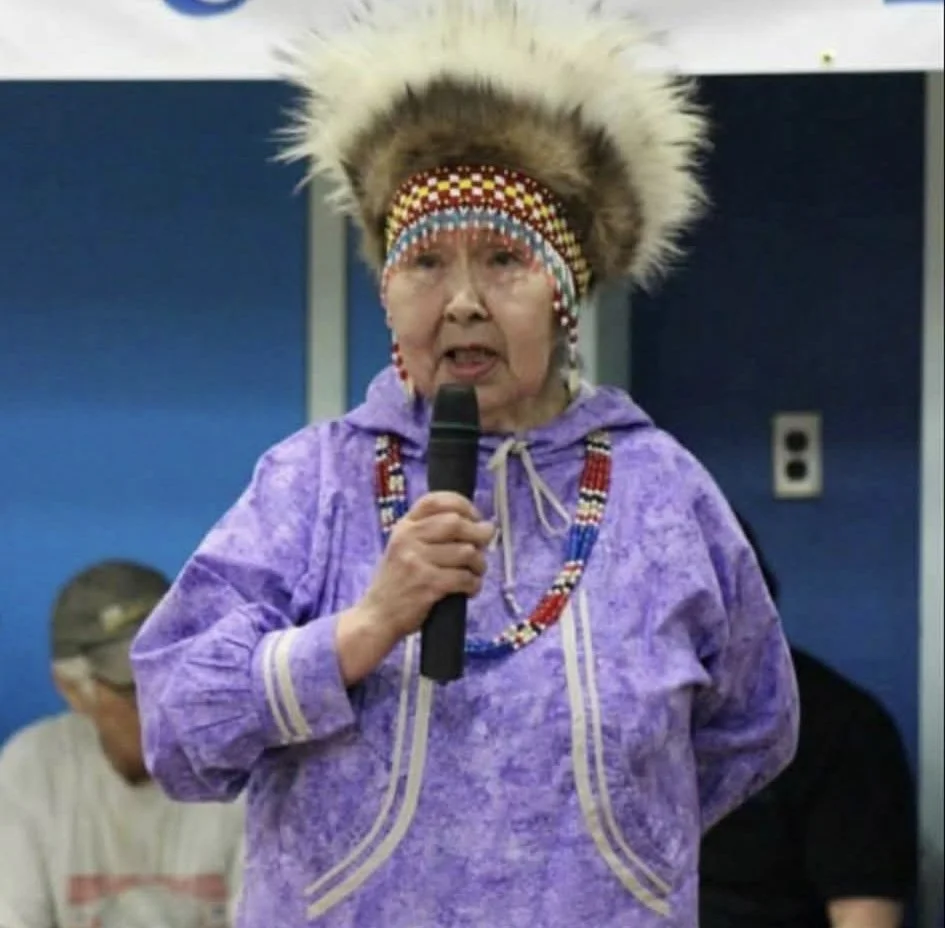
Paniliar Theresa Abraham
April 9, 1941 - September 11, 2021
It is customary for the Cama’i Dance Festival to dedicate the event to at least one inspiring individual whose legacy helped to shape and preserve our cultural traditions in the delta. The Cama’i Dance Festival is deeply honored to recognize the contributions of Paniliar Theresa Abraham of Chefornak and dedicates this year’s event to her memory.
Background
Paniliar was born and raised in the village of Caputnguaq, near the coast of southwest Alaska. Many residents of this community, including Paniliar relocated to the village of Chefornak when Alaska became an American territory. In Chefornak, she and her husband Jobe raised nine children.
Legacy work
Paniliar always made herself available to pass down Yup’ik cultural knowledge, whether it was by assisting with hands-on activities, through recorded interviews or sharing her vast knowledge at public events. Paniliar’s contributions of Indigenous knowledge were incorporated into many Calista Education & Culture, Inc. publications like All the Land’s Surface is Medicine, The Flying Parka, and Our Yup’ik World & Weather, ensuring the preservation of our Yup’ik culture for future generations.
Umkumiut, a village on Qaluyaat (Nelson Island) hosts many cultural camps attended by Yup’ik people of all ages, from youth to elders who all process fish following their seasonal availability. It’s here that Paniliar participated, skillfully showing the younger generation how to process and preserve food that will sustain us through the winter. She believed strongly in starting children young, giving them tools to practice aspects of food preservation and adapting with the child’s capabilities.
In her community, she was a patient teacher of yuraq. Many who knew her describe her as calm and playful– using humor to engage with those around her. Many will attribute the role of “leader” to a male drummer, but it’s usually the women who they rely on to remember carefully choreographed movements and lyrics for the stories the dances tell.
Personal life
Those who knew Paniliar best describe her as warm, attentive, resourceful and hospitable. In the Yup’ik culture, men often assume the role of hunter and provider, braving the elements to ensure their families have enough food and wood for heat. Their success often depends on the quality of their tools and gear. Paniliar expertly crafted fur clothing for her family, including atkuks, piluguqs, mittens and more.
Her handiwork, including intricately woven grass baskets, also supplemented her family’s income to be able to afford fuel for subsistence activities and for the purchase of essential equipment. Through her life, she showed us what pingnatugyaraq, striving for Yup’ik excellence, truly means.